Description
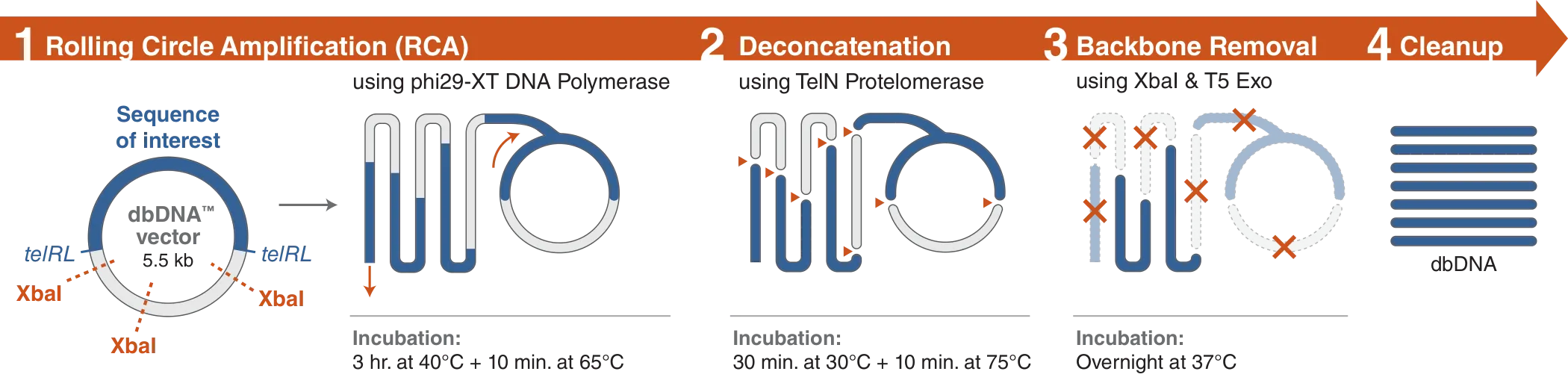
In collaboration with Touchlight, NEB has developed the EnClose Cell-free dbDNA Synthesis Kit. It includes everything needed to enzymatically generate closed-ended linear double-stranded (doggybone) dbDNA (Figure 1) containing a sequence of interest (SOI). The robust combination of phi29-XT DNA Polymerase for high-yield rolling circle amplification (RCA) and TelN Protelomerase for deconcatenation and covalent closure of linear dsDNA ends enables a streamlined one-day workflow (Figure 2) that produces cell-free dbDNA for downstream applications such as in vitro transcription (IVT), LV vector and AAV vector production and more.
Figure 1: dbDNA (doggybone DNA) is a linear, double-stranded DNA with covalently-closed ends
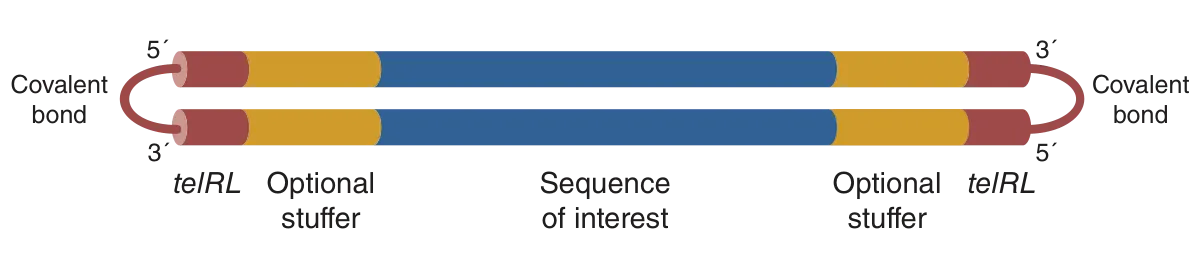
Figure 2: Overview of the EnClose Cell-free dbDNA Synthesis Kit workflow
The dbDNA Vector (Figure 3) provided with this kit is designed to serve as both an input source for positive control reactions, and as an optimized, flexible destination vector for your own sequence of interest (SOI) upstream of dbDNA production. The dbDNA Vector utilizes a high-copy pUC origin (ori) for higher yields and contains the Kanamycin resistance gene (KanR) for reliable transformant selection following cloning.
Visit Practical Tips for Making and Working with dbDNA for expert guidance and best practices.
Figure 3: EnClose Cell-free dbDNA Synthesis Kit provides high dbDNA yield across constructs
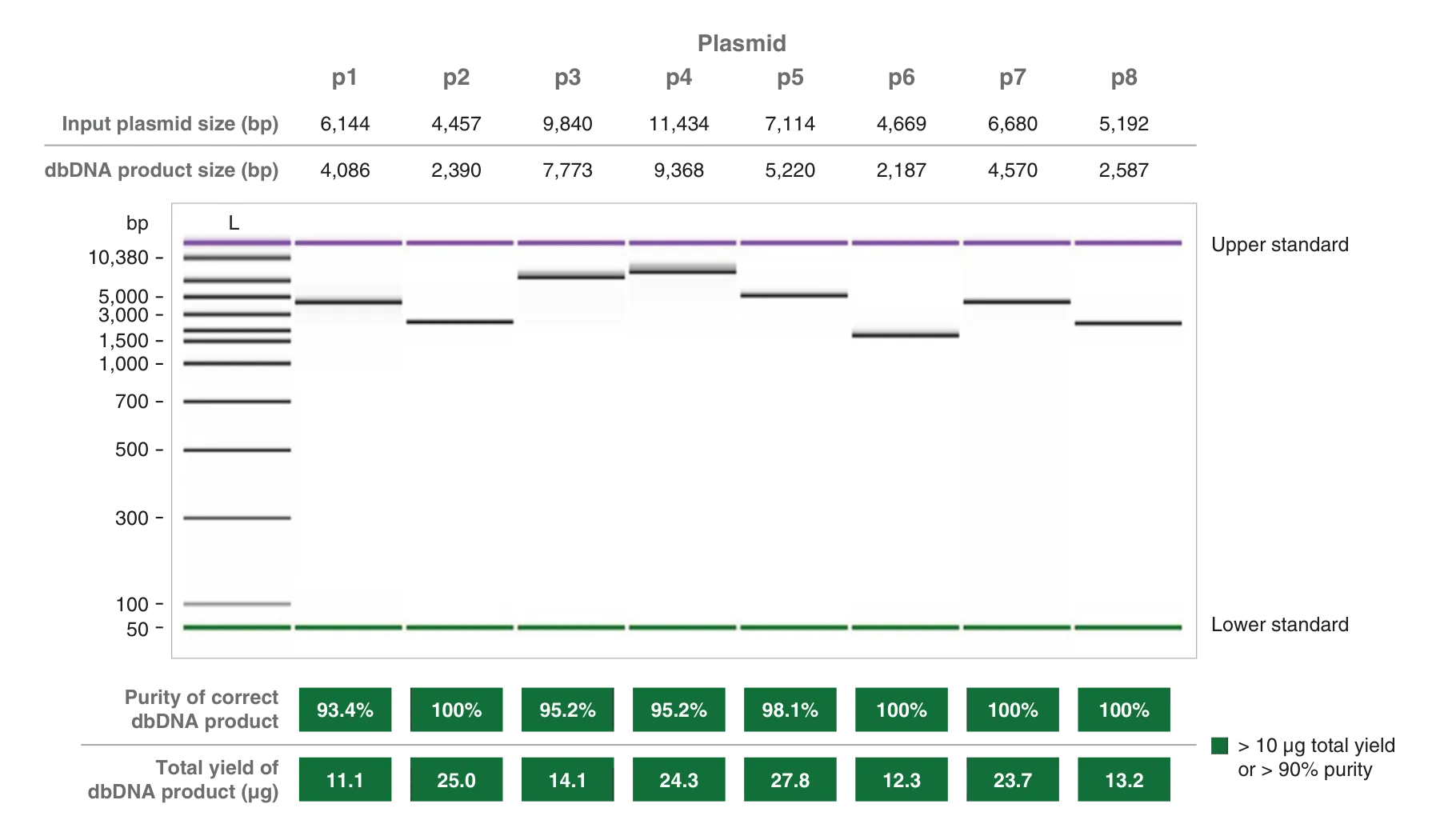
The dbDNA workflow supports a range of input plasmid and product sizes, delivering > 90% yield of the desired dbDNA; yield variation depends on sequence of interest (SOI) size and features. Product yields were quantified using an Unchained Labs® Lunatic® spectrophotometer. 50 ng of DNA sample was loaded into each lane of a BioAnalyzer® 12000 to determine purity of correct dbDNA product.
Figure 4: EnClose Cell-free dbDNA Synthesis Kit: Scalable from screening to high-yield production
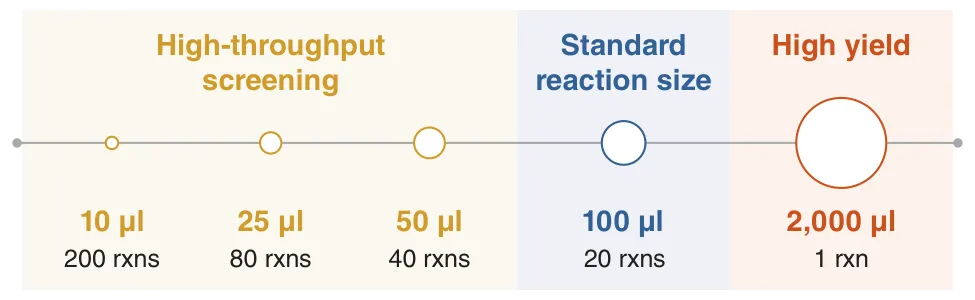
dbDNA synthesis reactions scale linearly across a wide volume range, supporting workflows from 10 µl screening assays to 2,000 µl high-yield production needs.
Figure 5: dbDNA yield scales linearly with RCA reaction volume between 10 µl and 100 µl
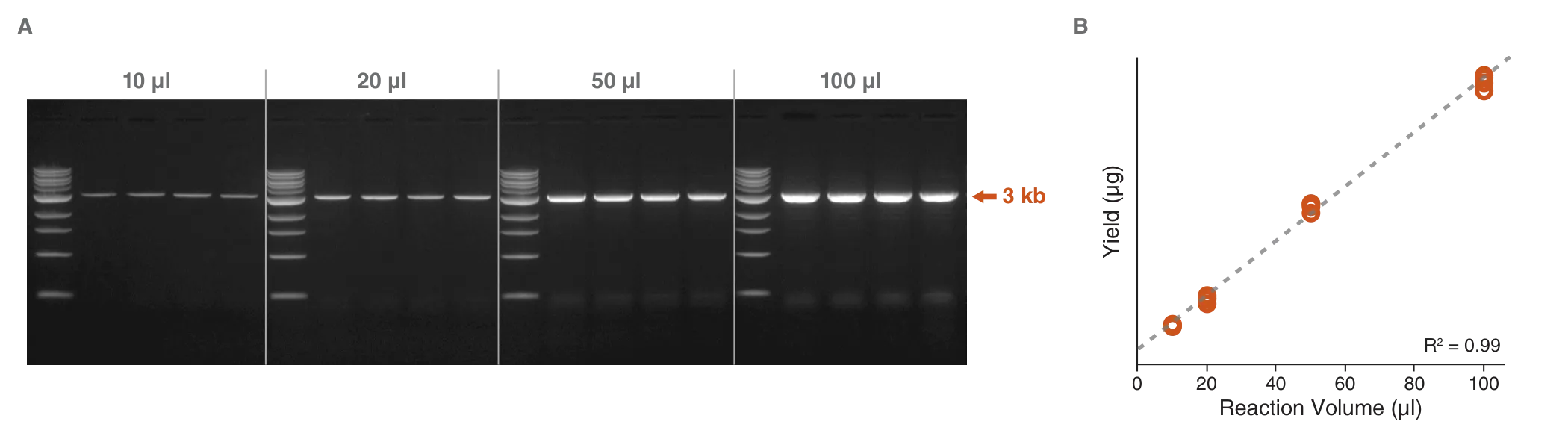
Quadruplicate dbDNA reactions were initiated using RCA reaction volumes of 10, 20, 50 or 100 µl with the dbDNA™ Vector as a control input. The volumes of reaction components added for each subsequent step were scaled proportionately to the protocol in the E9301 kit manual. The dbDNA products were purified using the Monarch® Spin High-Capacity DNA Cleanup Kit (NEB #T1135) and eluted in 100 µl of 0.1X Tris-EDTA.
A. Products were run on a 1.2% agarose gel to verify dbDNA size and purity.
B. Product yields were quantified using an Unchained Labs® Lunatic® spectrophotometer.
Figure 6: dbDNA reactions generate high yields of product in a short period of time; NEBuilder HiFi DNA Assembly reactions allow for completely cell-free process
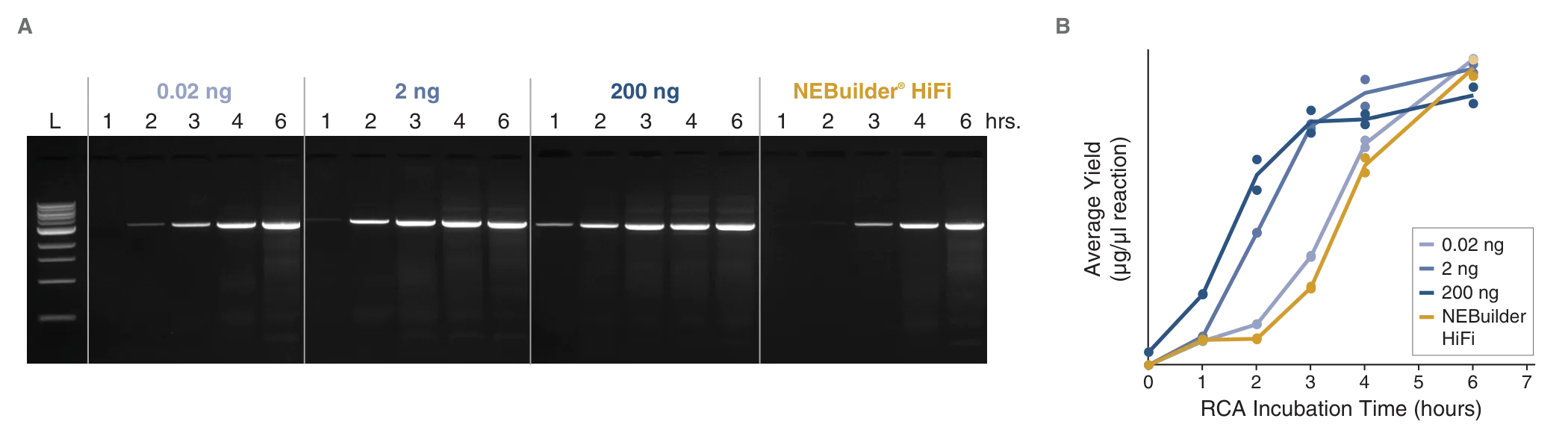
Duplicate dbDNA reactions were carried out using the indicated amount of dbDNA™ Vector as a control input or diluted NEBuilder® HiFi reaction DNA. NEBuilder HiFi reactions were diluted 1:10 with 0.1X Tris-EDTA, and 0.4 µl of diluted NEBuilder HiFi reaction was used per 20 µl RCA reaction. 20 µl RCA reactions were carried out for the indicated times.
A. Products were run on a 1.2% agarose gel to verify dbDNA size and purity.
B. Product yields were quantified using an Unchained Labs Lunatic spectrophotometer.
Cloning your SOI into the dbDNA Vector is uniquely flexible. It can be achieved through a variety of cloning modalities supported by New England Biolabs, including traditional restriction enzyme (RE) cloning, NEBuilder® HiFi DNA Assembly, and NEBridge® Golden Gate Assembly (for insertion of high-complexity or repetitive elements). Visit Cloning into the dbDNA™ Vector for more information.
Figure 7: dbDNA Vector plasmid map & sequence
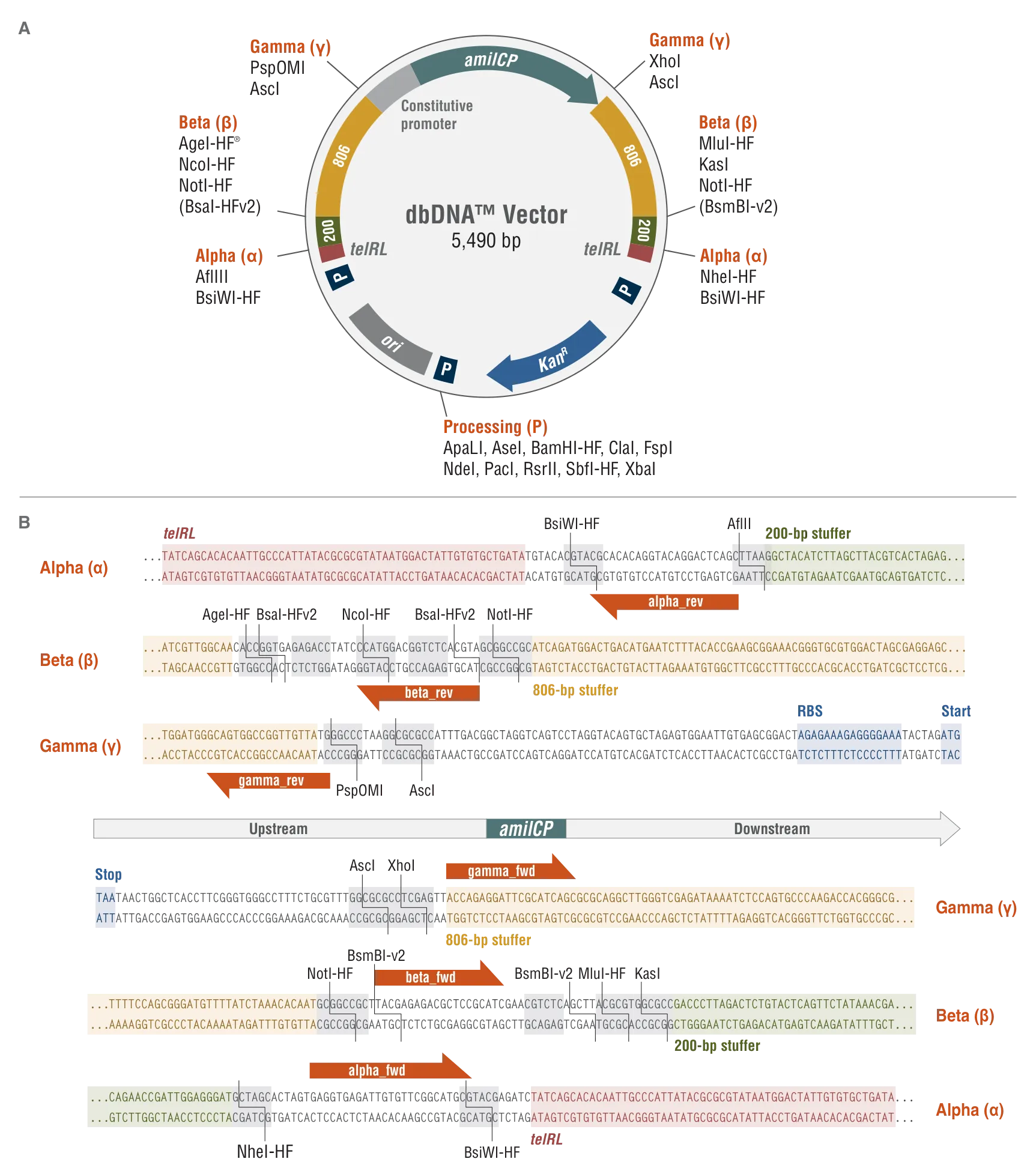
A. dbDNA Vector plasmid map.
B. Upstream (top) and downstream (bottom) sequence of dbDNA Vector for traditional restriction enzyme cloning and NEBuilder® HiFi DNA Assembly primer design.
- This product is related to the following categories:
-
Closed-ended DNA & Protelomerases,