Description
The NEBNext Companion Module for Oxford Nanopore Technologies Direct RNA Sequencing is a convenient solution that simplifies direct RNA library preparation. It includes the ONT-validated NEB ligation and reverse transcription reagents for use with the ONT SQK-RNA004 protocol (non-barcoded workflow), provided in volumes optimized for this workflow.
Included Reagents:
- Induro Reverse Transcriptase
- Induro RT Reaction Buffer
- Deoxynucleotide (dNTP) Solution Mix
- NEBNext Quick Ligation Reaction Buffer
- T4 DNA Ligase
- RNase Inhibitor, Murine
- Nuclease-free Water
All reagents are manufactured to stringent quality standards. Each lot is performance tested as a complete set through direct RNA library preparation and sequencing on an ONT device to support consistent results.
This module is used in conjunction with the ONT Direct RNA Sequencing Kit (SQK-RNA004/-XL). The appropriate device-specific SQK-RNA004 protocol from ONT should be followed for use of these reagents.
Figure 1: The NEBNext Companion Module for Oxford Nanopore Technologies Direct RNA Sequencing simplifies direct RNA library preparation
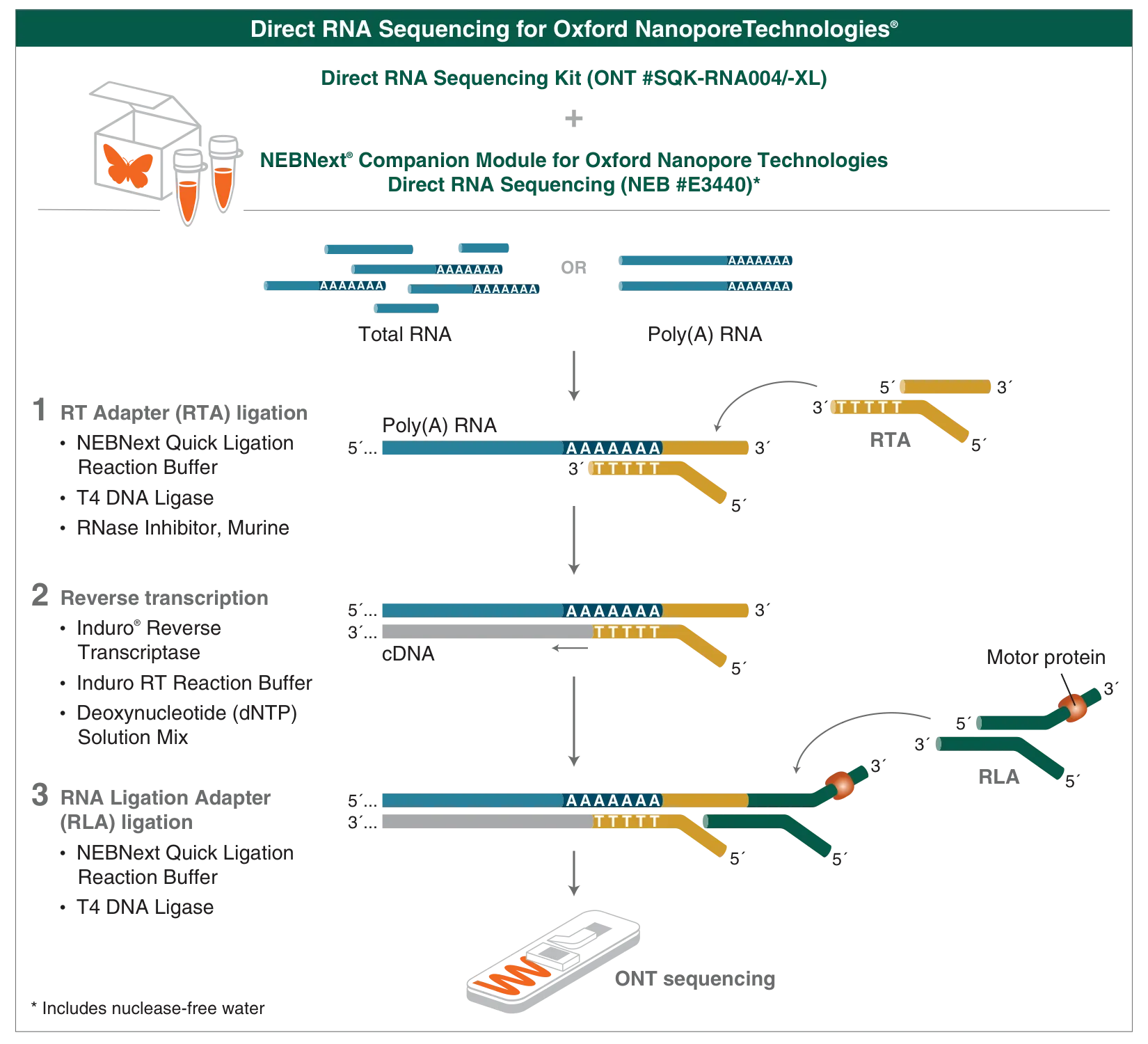
The NEBNext Companion Module contains the NEB reagents recommended in the SQK RNA004 workflow and is used with the Oxford Nanopore Technologies Direct RNA Sequencing Kit (SQK RNA004/-XL) to prepare non-barcoded direct RNA sequencing libraries from poly(A)-tailed or total RNA. In this workflow, the RT Adapter (RTA) is ligated to poly(A) RNA, followed by reverse transcription to generate a complementary cDNA strand that stabilizes the RNA and improves sequencing output. The resulting RNA–cDNA hybrid is then ligated to the RNA Ligation Adapter (RLA) for loading and sequencing on Oxford Nanopore Technologies instruments.
Figure 2: Reverse transcription improves read lengths, transcript coverage, and nanopore utilization in direct RNA sequencing
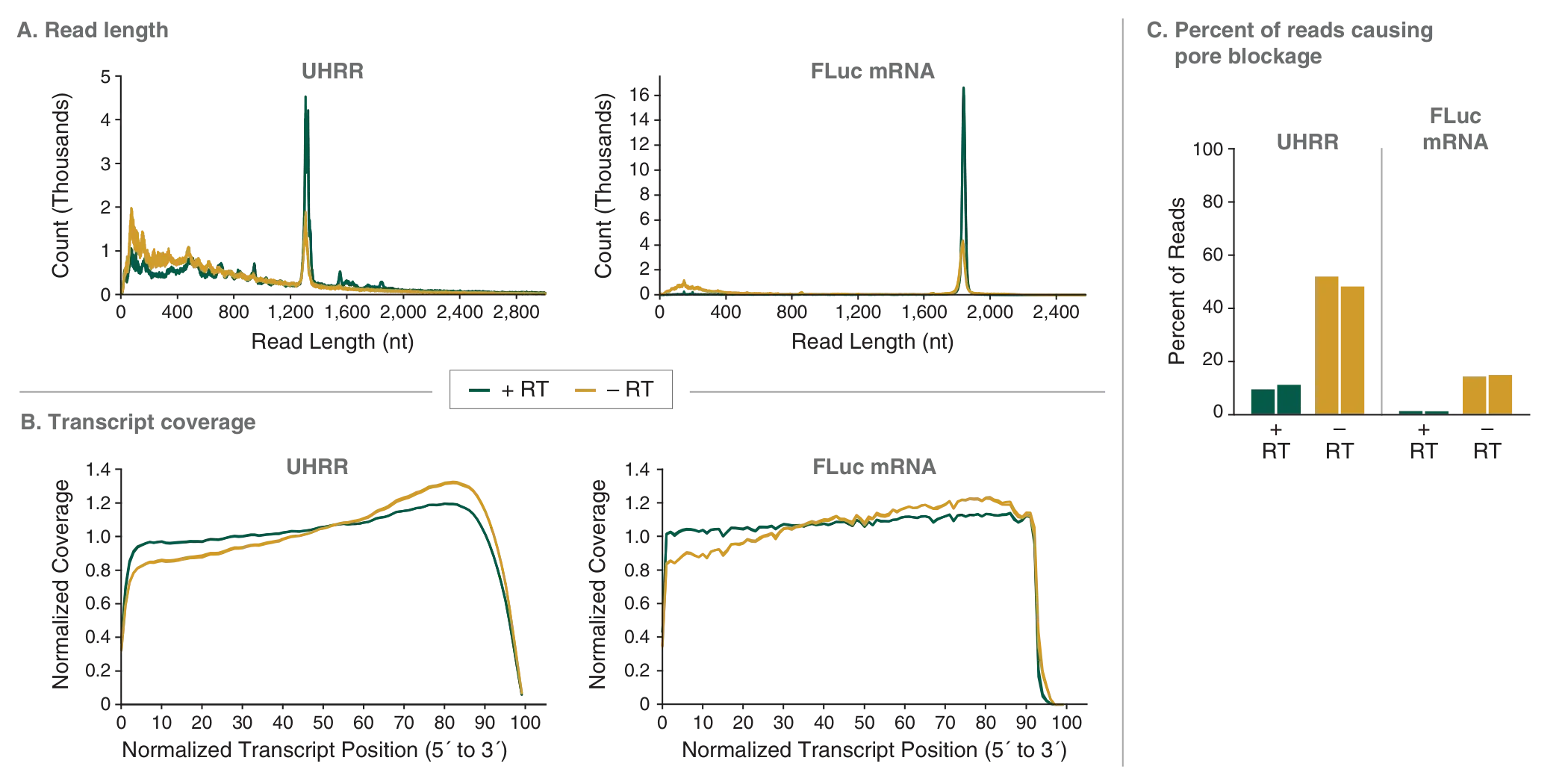
Direct RNA libraries were prepared in duplicate from either 1 µg of total Universal Human Reference RNA (UHRR)(Agilent) containing a 1.3 kb spike-in control RNA (ONT RCS) or 500 ng of in vitro transcribed 1.9 kb firefly luciferase mRNA (FLuc) (NIST RGTM 10202) with or without reverse transcription. The libraries were constructed using the Oxford Nanopore Technologies Direct RNA Sequencing Kit (SQK-RNA004) in combination with the NEBNext Companion Module for Oxford Nanopore Technologies Direct RNA Sequencing and sequenced on a GridION. Reads were base called using Dorado (v1.1.1, model rna004_130bps_sup@v5.2.0) and aligned to the GRCh38 reference (UHRR) or the FLuc template plasmid sequence using minimap2.
Transcript coverage was analyzed using Qualimap RNASeq.(A) Distribution of base called read lengths for UHRR and FLuc mRNA. (B) Normalized transcript coverage for aligned UHRR and FLuc mRNA reads. (C). Percent of reads from each library ending due to detected pore blockage as reported in MinKNOW sequencing summaries.
These results highlight the benefits of a highly processive reverse transcriptase in direct RNA sequencing workflows.
Figure 3: Analysis of mRNA quality attributes by direct RNA sequencing
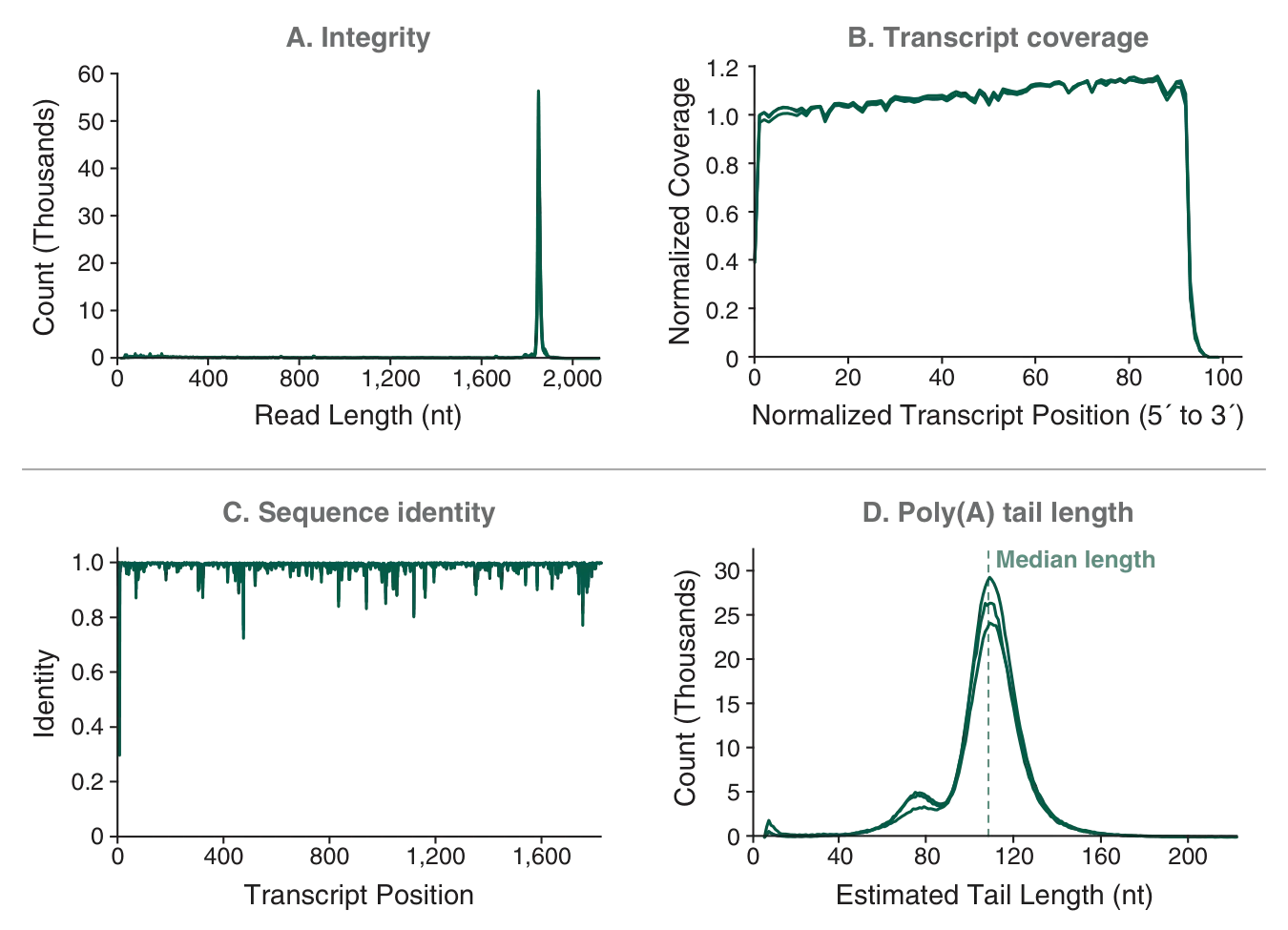
Direct RNA libraries were prepared in triplicate from 1.9 kb in vitro transcribed FLuc mRNA containing a template-encoded 111 nt poly(A) tail (NIST RGTM 10202). The libraries were constructed using the Oxford Nanopore Technologies Direct RNA Sequencing Kit (SQK-RNA004) in combination with the NEBNext Companion Module for Oxford Nanopore Technologies Direct RNA Sequencing and sequenced on a GridION. Reads were basecalled using Dorado (v1.1.1, model rna004_130bps_sup@v5.2.0) and aligned to the FLuc reference sequence using minimap2.
(A) Distribution of read lengths. (B) Normalized transcript coverage of aligned reads. (C) Fraction of reads correctly mapping to the reference base at each position (identity). (D) Distribution of poly(A) tail lengths estimated by Dorado. Line indicates median length of estimates, 109 nt.
These results demonstrate the utility of direct RNA sequencing for characterizing sequence and biochemical quality attributes of IVT mRNAs.
Figure 4: Identification of fusion transcripts in tumor samples using direct RNA sequencing
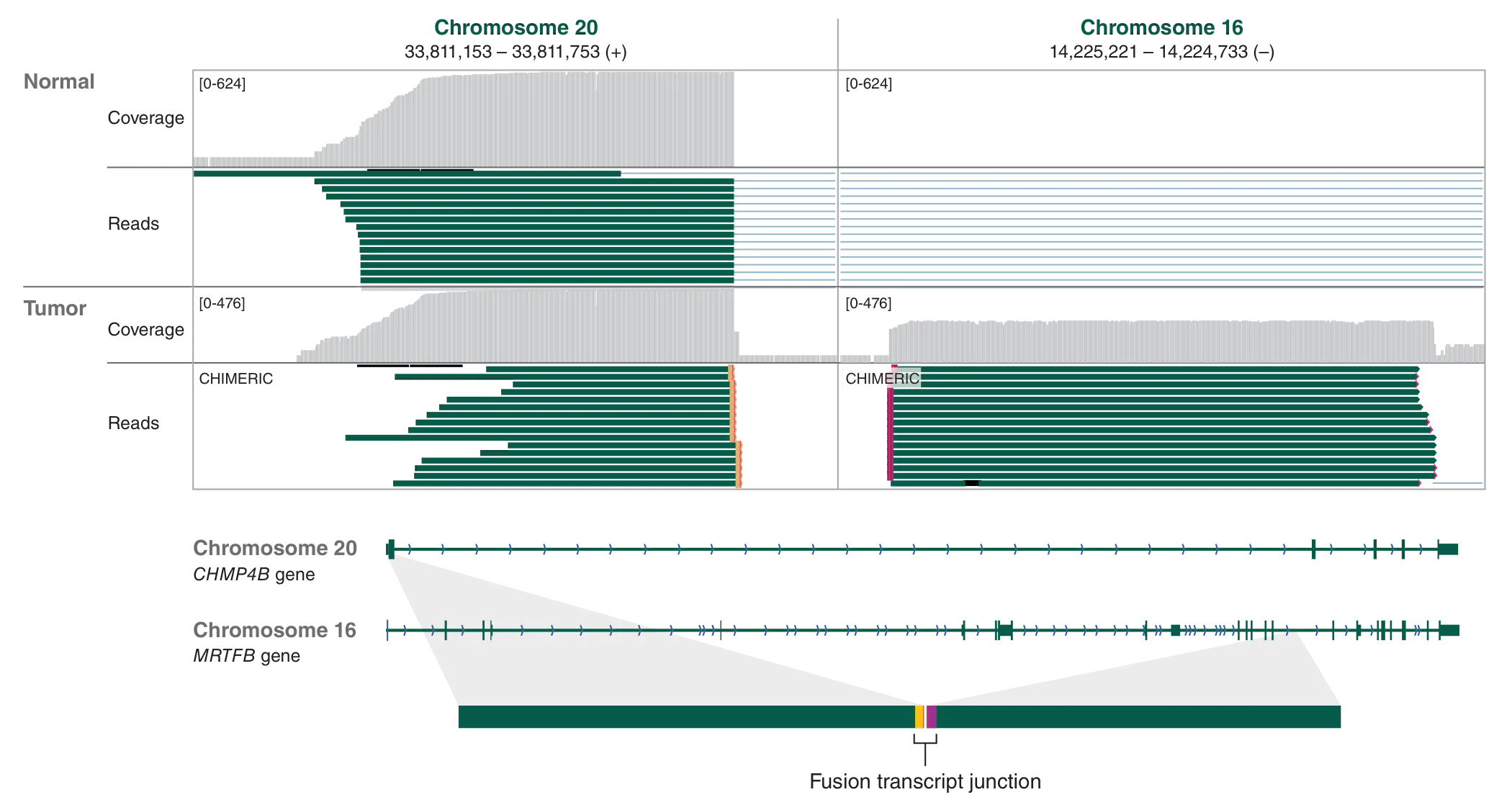
RNA from paired tumor and normal rectum tissues (BioChain®) was sequenced using the direct RNA sequencing protocol. Libraries were constructed using the Oxford Nanopore Technologies Direct RNA Sequencing Kit (SQK-RNA004) in combination with the NEBNext Companion Module for Oxford Nanopore Technologies Direct RNA Sequencing and sequenced on a PromethION 2 Solo. Reads were aligned to the GRCh38 reference genome using minimap2 and chimeric reads were investigated in the Integrative Genomics Viewer to identify putative fusion transcripts. One example is shown: transcripts initiate in the first exon of the CHMP4B gene on chromosome 20 and terminate in an intronic region of the MRTFB gene on chromosome 16.
These reads are present in the tumor sample but absent in the matched normal sample.
These results demonstrate the applicability of long-read direct RNA sequencing for structural variant characterization in tumor samples.
- This product is related to the following categories:
-
Library Preparation for Oxford Nanopore Technologies,
-
Next Generation Sequencing Library Preparation,