Description
The Monarch Mag Cell-free DNA (cfDNA) Extraction Kit is a magnetic bead-based method for reproducible extraction of circulating cell-free DNA (ccfDNA) from biofluids such as plasma, urine and CSF. The kit can be used to isolate cell-free DNA (cfDNA) for use in discovery and detection workflows including circulating tumor DNA (ctDNA) profiling, cancer biomarker discovery, and oncology diagnostics research. This kit enables efficient extraction of typical cfDNA fragments (150-300 bp), and as low as 50 bp. Our scalable extraction process permits flexibility in sample volume and promotes efficient utilization of reagents. The standard protocol of this extraction kit is designed for 2 ml sample inputs and can easily be scaled to accommodate 1-4 ml sample input volumes. Supplementary protocols enable additional functionality and recovery. This kit is compatible with several different sample collection tubes including standard anticoagulant tubes (EDTA, sodium citrate etc.), as well as other commercially available preservative tubes. The silica-coated magnetic beads, combined with the optimized buffer chemistry, ensure maximum binding and recovery of cfDNA. When integrated with NEB’s sequencing and amplification applications, our cfDNA extraction solution enables comprehensive and streamlined workflows to generate high-quality data from challenging biofluid samples.
Need automation support or a script? Submit a request using the Monarch Automation Support & Script Request form. Automation scripts are currently available for select platforms.
|
Properties |
| Purification Format |
Magnetic bead |
| Compatible Platform |
Manual or automated |
| Available Sizes |
2 ml samples × 20 preps
2 ml samples × 100 preps
Scalable for sample volumes of 1–4 ml |
| Intended Application |
Cell-free DNA extraction from liquid samples |
| Sample Type Compatibility |
Plasma and urine (evaluated); cerebrospinal fluid (CSF) (suitable) |
| Elution Volume |
As low as 15 µl, depending on sample input volume |
| Compatible Downstream Applications |
cfDNA library preparation and sequencing for mutation detection,
detecting methylation signatures, and amplification methods including digital PCR |
Figure 1: Monarch Mag Cell-free DNA (cfDNA) Extraction Kit enables reproducible extraction of high-quality cfDNA
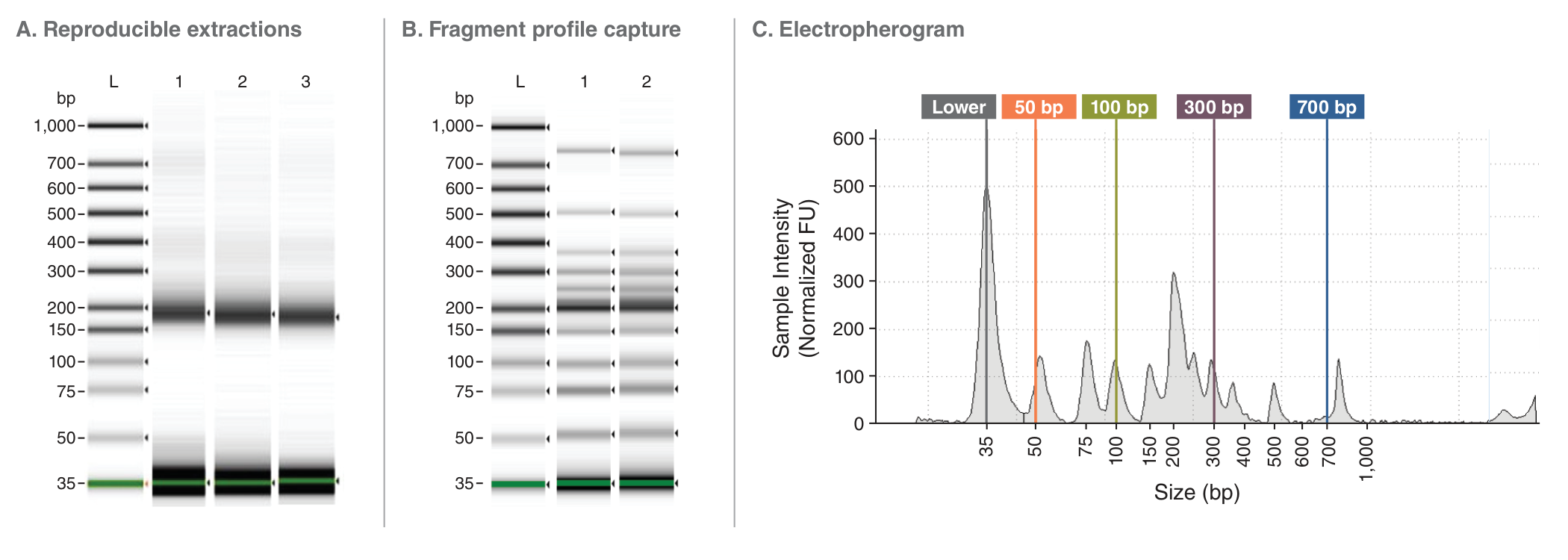 Circulating cell-free DNA isolated using the Monarch Mag Cell-free DNA (cfDNA) Extraction Kit is high-quality, concentrated and captures the full range of the expected fragment profile of the input sample. (A) cfDNA extractions from healthy donor plasma were run on a Cell-Free DNA TapeStation ® (Agilent ® Technologies). Representative electropherograms show efficient and reproducible extraction of expected nucleosomal cfDNA fragments (150 bp). (B,C) Plasma was spiked with Low Molecular Weight DNA Ladder (NEB #N3233) to simulate fragmented cfDNA, and was subsequently extracted using the Monarch Mag Cell-free DNA (cfDNA) Extraction Kit. DNA fragments in the size range of 50 bp were efficiently extracted.
Figure 2: Monarch Mag Cell-free DNA (cfDNA) Extraction Kit enables higher yield compared to other leading suppliers
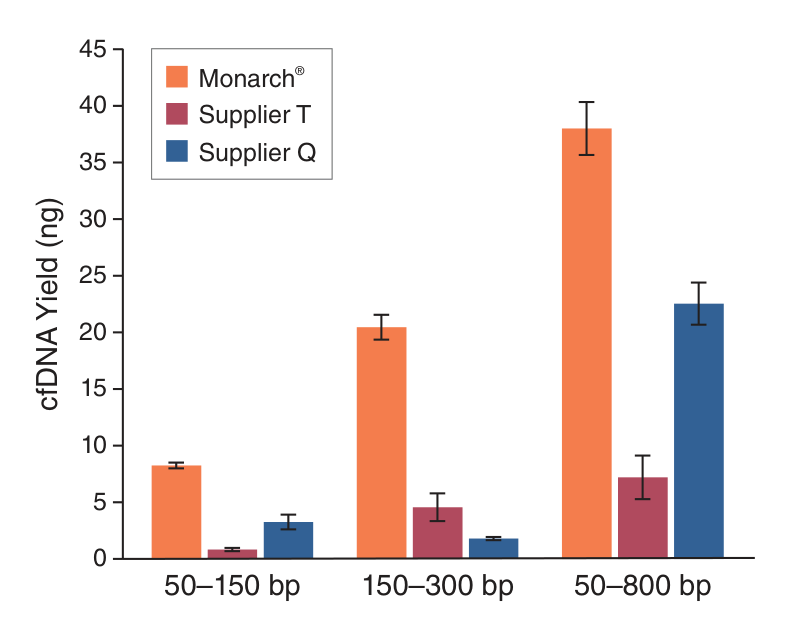 The Monarch Mag Cell-free DNA (cfDNA) Extraction Kit (NEB #T4070) outperforms other leading suppliers. Pooled healthy donor plasma was spiked with Low Molecular Weight DNA Ladder (NEB #N3233), to simulate fragmented cfDNA. 4 ml of the pooled sample was used as the input for extraction using the Monarch Mag Cell-free DNA (cfDNA) Extraction Kit and two commercially available cfDNA extraction kits. Isolated cfDNA was analyzed using Cell-Free DNA TapeStation (Agilent Technologies). Region-specific yield recovery was measured using TapeStation Analysis software (Agilent Technologies) to assess the range of fragment sizes recovered. The Monarch Mag Cell-free DNA (cfDNA) Extraction Kit recovers a higher yield in the typical cfDNA fragment region (150-300 bp), as well as of shorter DNA fragments (< 150 bp), compared to other cfDNA extraction kits from leading suppliers.
Figure 3: Monarch Mag Cell-free DNA (cfDNA) Extraction Kit enables generation of high-quality cfDNA libraries using NEBNext ®Ultra™II DNA Library Prep
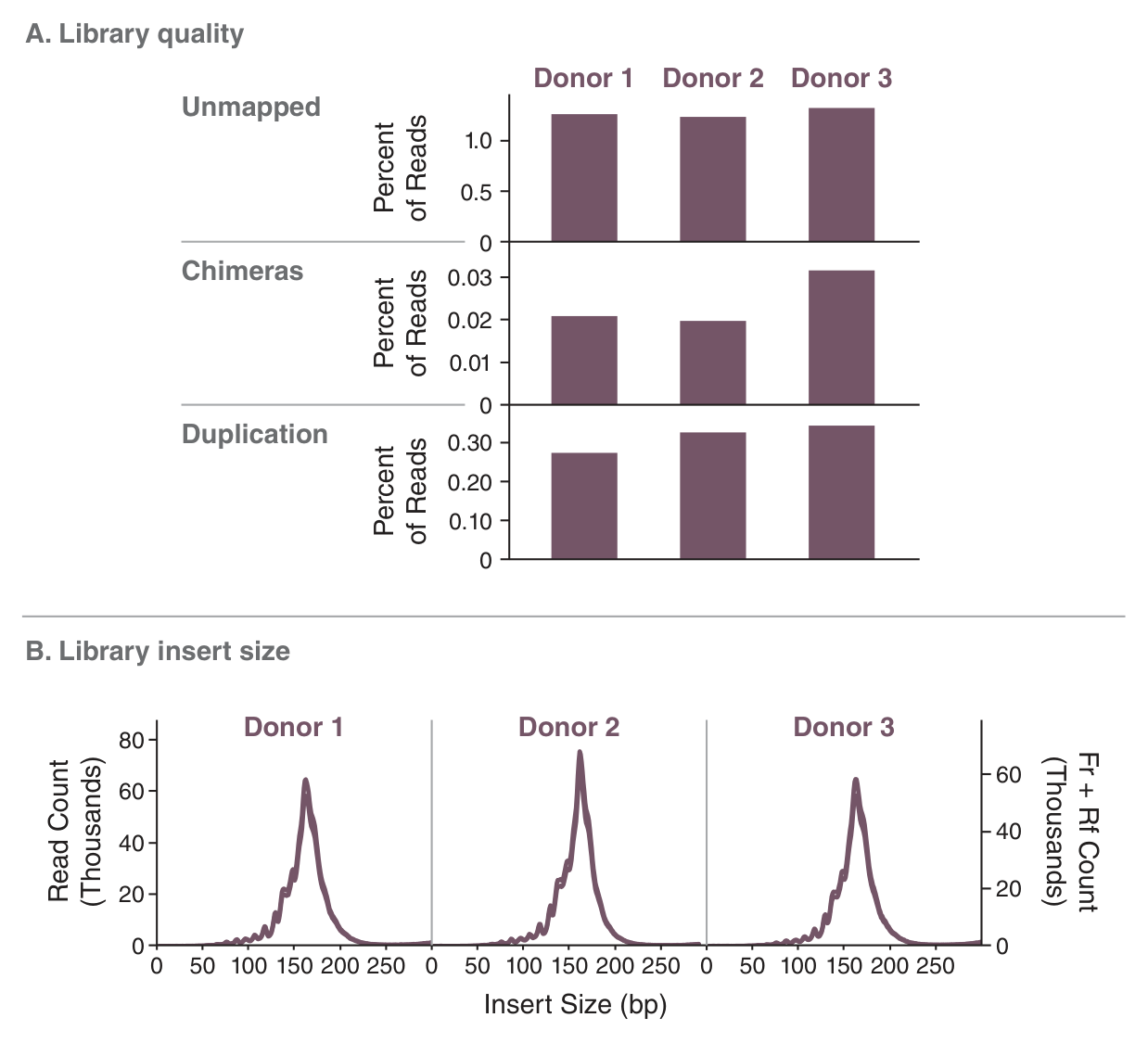 Extracted cfDNA produces high-quality libraries and sequencing metrics. 45 μl of cfDNA (ranging from 6 ng input on average) was extracted using the Monarch Mag Cell-free DNA (cfDNA) Extraction Kit and used as input to prepare libraries using the NEBNext Ultra II DNA Library Prep Kit for Illumina (NEB #E7645) with Xgen ® Duplex Seq Adapters (Integrated DNA Technologies ®) and 9 PCR cycles. Libraries were sequenced on the Illumina ® NovaSeq ® 6000 2x100 bp and downsampled to 2M read pairs. Reads were trimmed using fastp (v.0.20.0), aligned to GRCh38 using Bowtie2 (v2.5.0), and duplicates were marked using Picard Mark Duplicate (v2.20.6). (A) Library quality metrics were assessed using Picard Alignment Summary Metrics (v1.56.0). Libraries show high quality data including high mapping rates and low levels of sequencing artifacts and errors. (B) Insert size was calculated using Picard Collect Insert Size Metrics (v1.56.0). Insert size shows the characteristic pattern of normal donor cfDNA.
Figure 4: Monarch Mag Cell-free DNA (cfDNA) Extraction Kit enables sensitive variant calling using hybrid capture sequencing
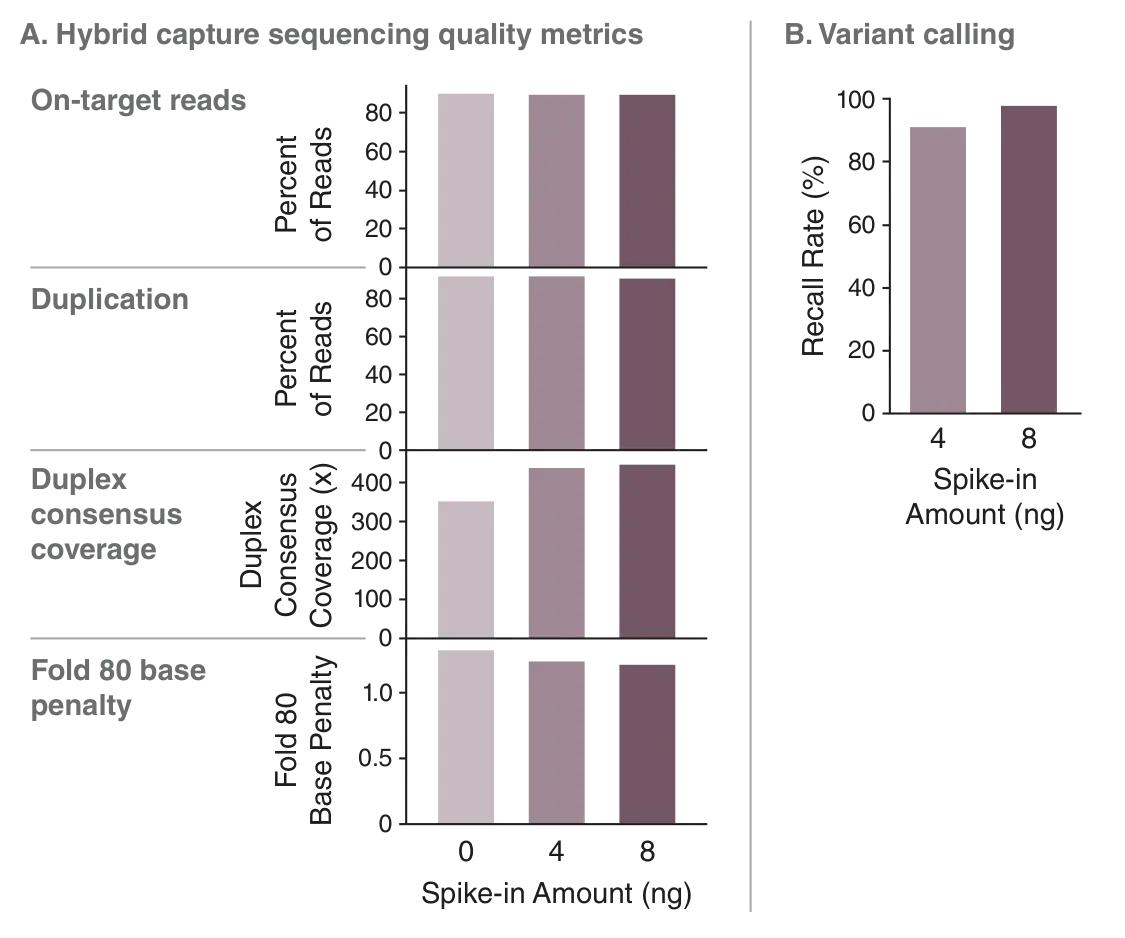 Cell-free DNA extracted using the Monarch Mag Cell-free DNA (cfDNA) Extraction Kit allows for variant detection. 4 ml plasma samples spiked with commercially available cfDNA reference (Mimix™OncoSpan™ cfDNA Reference Standard, Horizon Discovery) were extracted using Monarch Mag Cell-free DNA (cfDNA) Extraction Kit. 45 µl (2-4 ng) of extracted cfDNA (+/- spike-in) was used to make libraries with the NEBNext Ultra II DNA Library Prep Kit (NEB #E7645), undiluted IDT ® X-Gen Duplex Seq adapters, and 9 PCR cycles. The full volume of library (approximately 1000 ng) was used for multiplex capture using a custom panel from Twist Bioscience ®. Captured libraries were sequenced on the Illumina NovaSeq 6000 2x150 bp and downsampled to 75M read pairs. Reads were trimmed using fastp (v.0.20.0), aligned to GRCh38 using bwa-mem (v.0.7.17), and UMIs were processed using fgbio (v.2.3.0). (A) Library quality metrics were assessed using Picard HS Metrics (v.2.18.29). Duplex consensus coverage was calculated using mosdepth (v.0.2.6). High and uniform coverage was obtained with duplex consensus indicating high library complexity. (B) Somatic variant calling was performed using VarDict (v.1.8.3). The recall rate of the variants defined within the Mimix OncoSpan, cfDNA Reference Standard is shown. Recall rates greater than 90% were obtained for both spike-in libraries, indicating high sensitivity and library complexity.
Figure 5: Extraction with Monarch Mag Cell-free DNA (cfDNA) Extraction Kit allows for the capture of < 150 bp fragments, enabling representation of short fragments in sequencing libraries
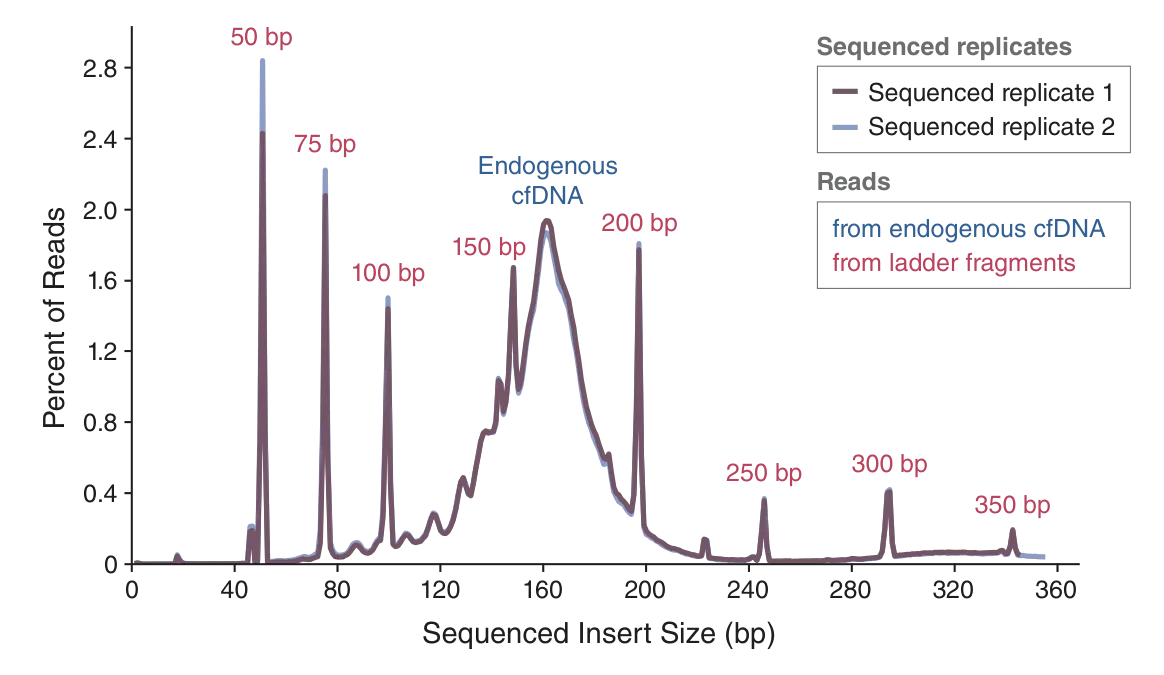 2ml plasma samples were spiked with 100 ng Low Molecular Weight DNA Ladder (NEB #3233) to simulate cfDNA with < 100 bp fragments. Samples were extracted using the Monarch Mag Cell-free DNA (cfDNA) Extraction Kit. 40 μl of extracted cfDNA (ranging from 10 ng input on average) was used to prepare libraries using the NEBNext Ultra II DNA Library Prep Kit (NEB #E7645) with XGen Duplex Seq Adapters (Integrated DNA Technologies) and 9 PCR cycles. Libraries were sequenced on the Illumina NovaSeq 6000 2x100 bp. Reads were trimmed with fastp (version 0.20.0), mapped to composite reference genome (grch38 + NEB Low Molecular DNA Ladder) with bwa-mem (version 0.7.17), duplicates were marked with UMI in Picard Mark Duplicates (version 2.26.3), and insert size was calculated with Picard Collect Insert Size Metrics (version 2.26.3).
Figure 6: Monarch Mag Cell-free DNA (cfDNA) Extraction Kit enables accurate allele frequency quantitation in cfDNA using digital PCR
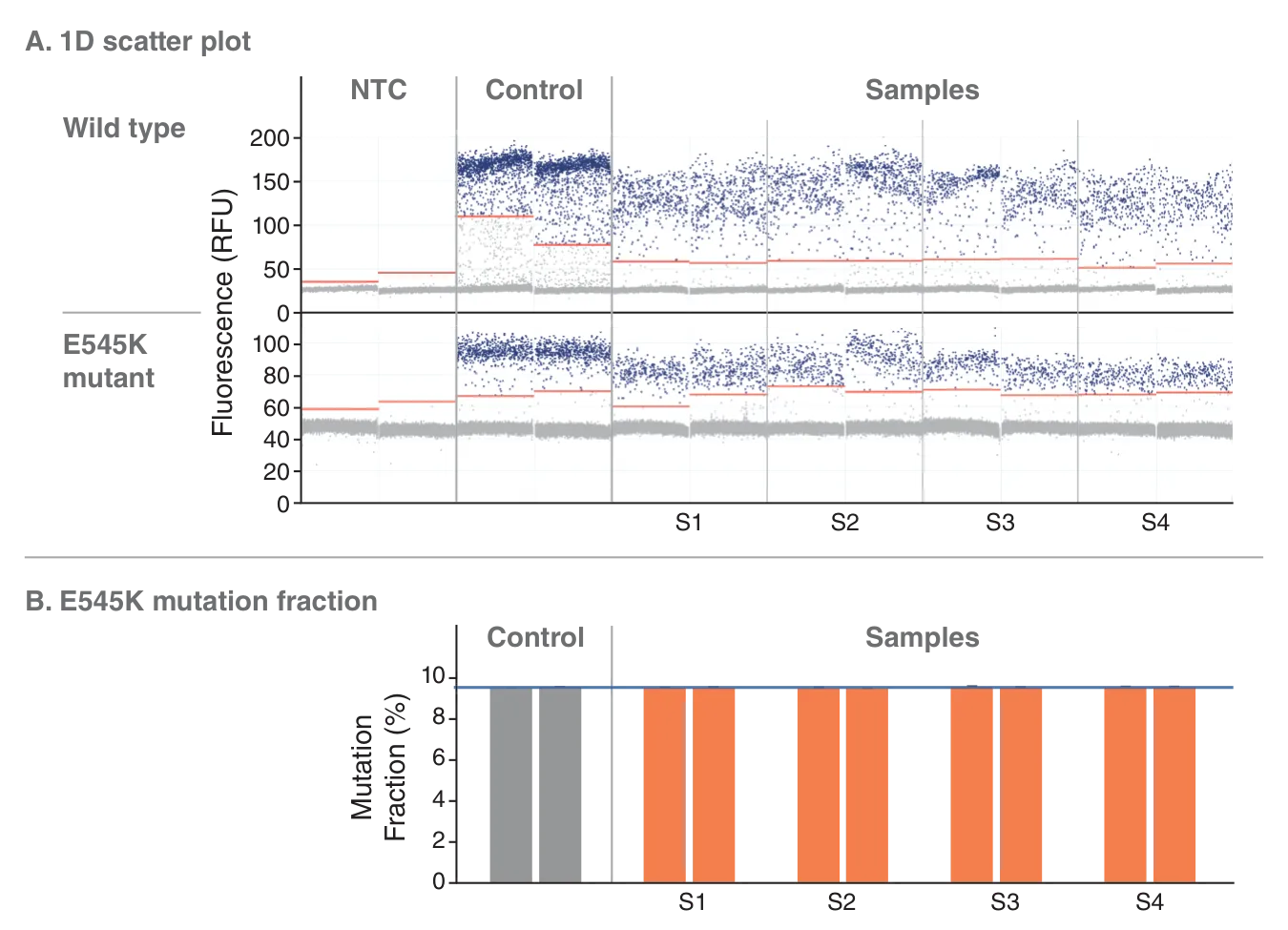 Extracted cfDNA enables sensitive dPCR-based detection. Four 4 ml plasma samples (S1–S4) were spiked with 1 ng commercially available cfDNA reference (Mimix OncoSpan cfDNA Reference Standard, Horizon Discovery) and extracted using the Monarch Mag Cell-free DNA (cfDNA) Extraction Kit. Extraction eluates were subjected to dPCR using the QIAcuity ® dPCR system (Qiagen ®), employing the QIAcuity Probe PCR Kit and 26k nanoplates, according to the manufacturer’s instructions. (A) Representative fluorescence plots show positive partitions for the PIK3CA p.E545K mutation (FAM) and wild-type (WT) allele (Cy5), demonstrating strong signal-to-noise (S/N) ratios and robust assay performance. The positive control (+CTRL) consisted of 10 ng per reaction of Mimix™OncoSpan cfDNA Reference Standard with 9% allelic frequency (AF). No Template Control (NTC) reactions confirmed the absence of non-specific amplification. (B) Quantification of E545K mutation fraction (%) across duplicate reactions. Consistent and accurate allele frequency measurements support the kit's suitability for sensitive mutation detection in duplex dPCR assays.
Figure 7: Monarch Mag Cell-free DNA (cfDNA) Extraction Kit is compatible with epigenetic profiling workflows
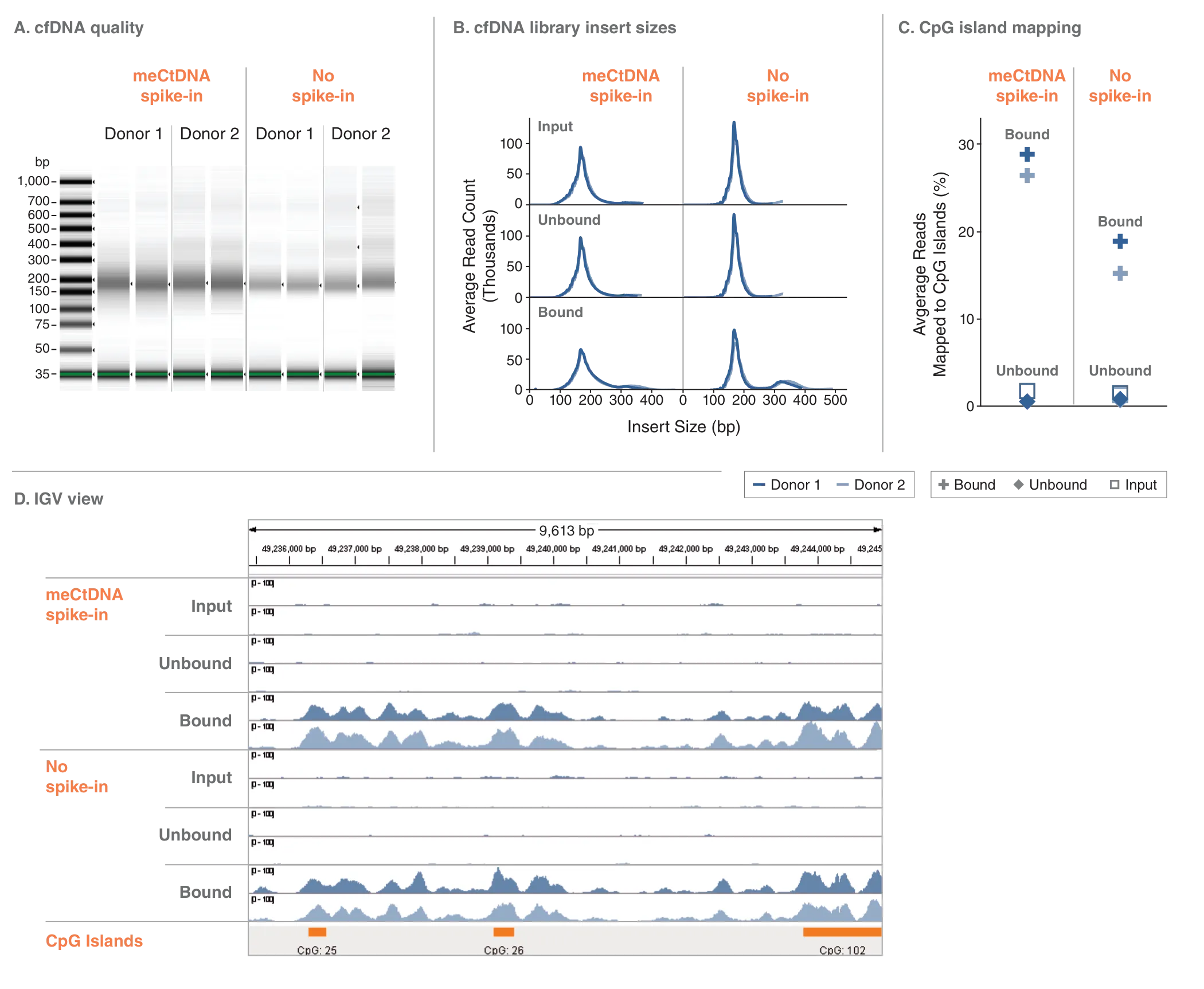 Extracted cfDNA can be used for detection of methylation signatures in circulating tumor DNA (ctDNA). 3 ml of healthy donor plasma was spiked with 10 ng of commercially available methylated ctDNA control material (Seraseq ® Methylated ctDNA Mutation Mix, LGC Clinical Diagnostics). The spiked samples, alongside unspiked plasma controls, were extracted using the Monarch Mag Cell-free DNA (cfDNA) Extraction Kit. EpiMark ® Methylated DNA Enrichment Kit (NEB #E2600) reagents were applied to isolated cfDNA. Libraries were prepared from pre-binding, unbound and bound DNA fractions using the NEBNext Ultra II DNA Library Prep Kit (NEB #E7645). Libraries were sequenced on an Illumina platform, and 10M reads for each library were aligned to a composite reference genome using Bowtie2. (A) Extractions evaluated using Cell-Free DNA TapeStation (Agilent Technologies) confirm high-quality cfDNA. (B) Insert sizes distributions for each sample. (C) Percent DNA mapping to human CpG islands (n=2 per input). D) IGV view of 3 human CpG islands show enrichment in bound cfDNA fractions. Efficient and reproducible extraction by the Monarch Mag Cell-free DNA (cfDNA) Extraction Kit can be utilized in biomarker detection and discovery in oncology research workflows.
Figure 8: Monarch Mag Cell-free DNA (cfDNA) Extraction Kit workflow
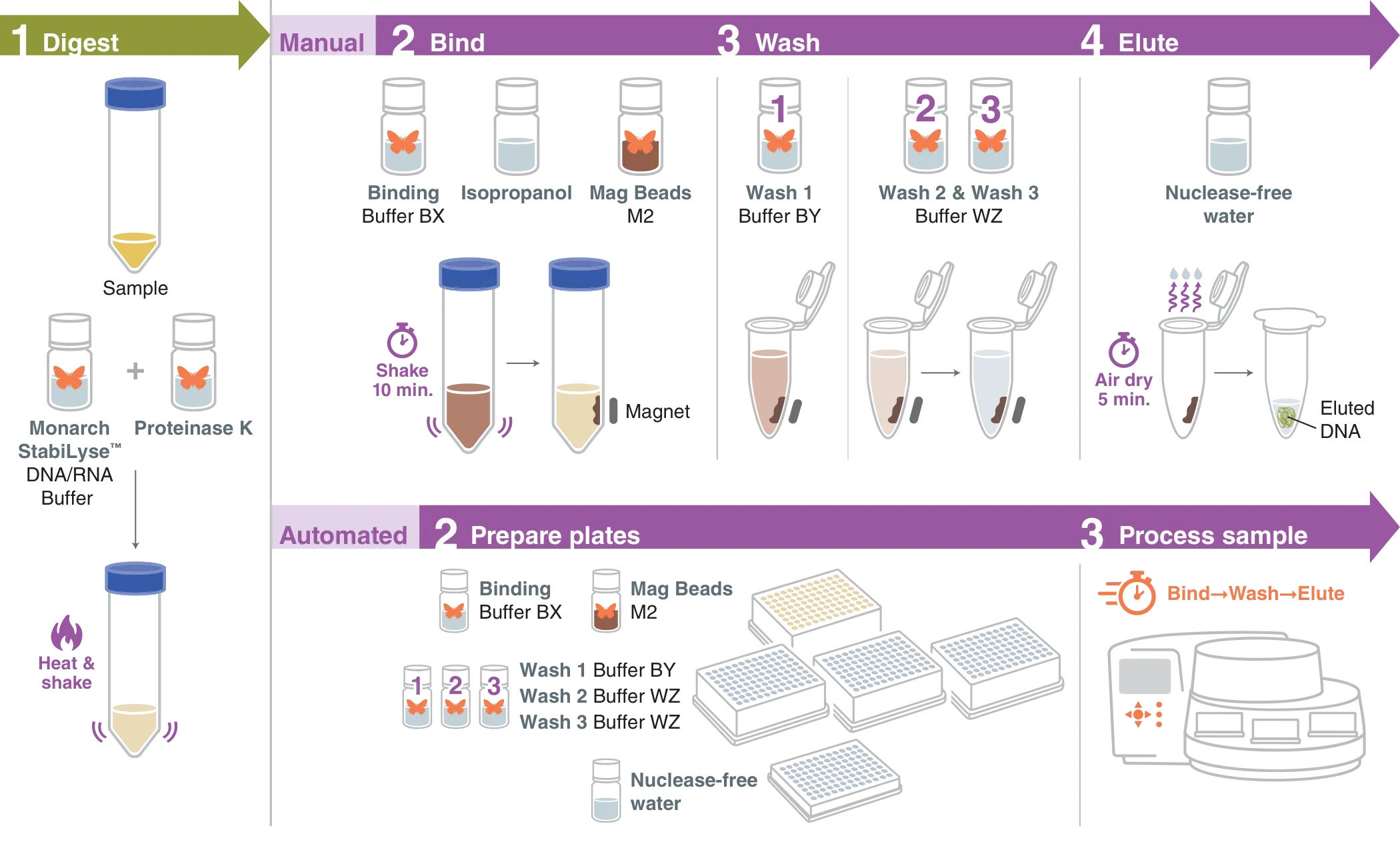 The Monarch Mag Cell-free DNA (cfDNA) Extraction Kit is designed for efficient and reproducible isolation of circulating cell-free DNA (cfDNA) from biofluids. Flexible by design, the kit supports both manual and automated workflows and can be readily scaled to accommodate different sample input volumes (1-4 ml).
- This product is related to the following categories:
-
Magnetic Bead-Based Nucleic Acid Purification,
-
Nucleic Acid Purification,
- This product can be used in the following applications:
-
Nucleic Acid Purification